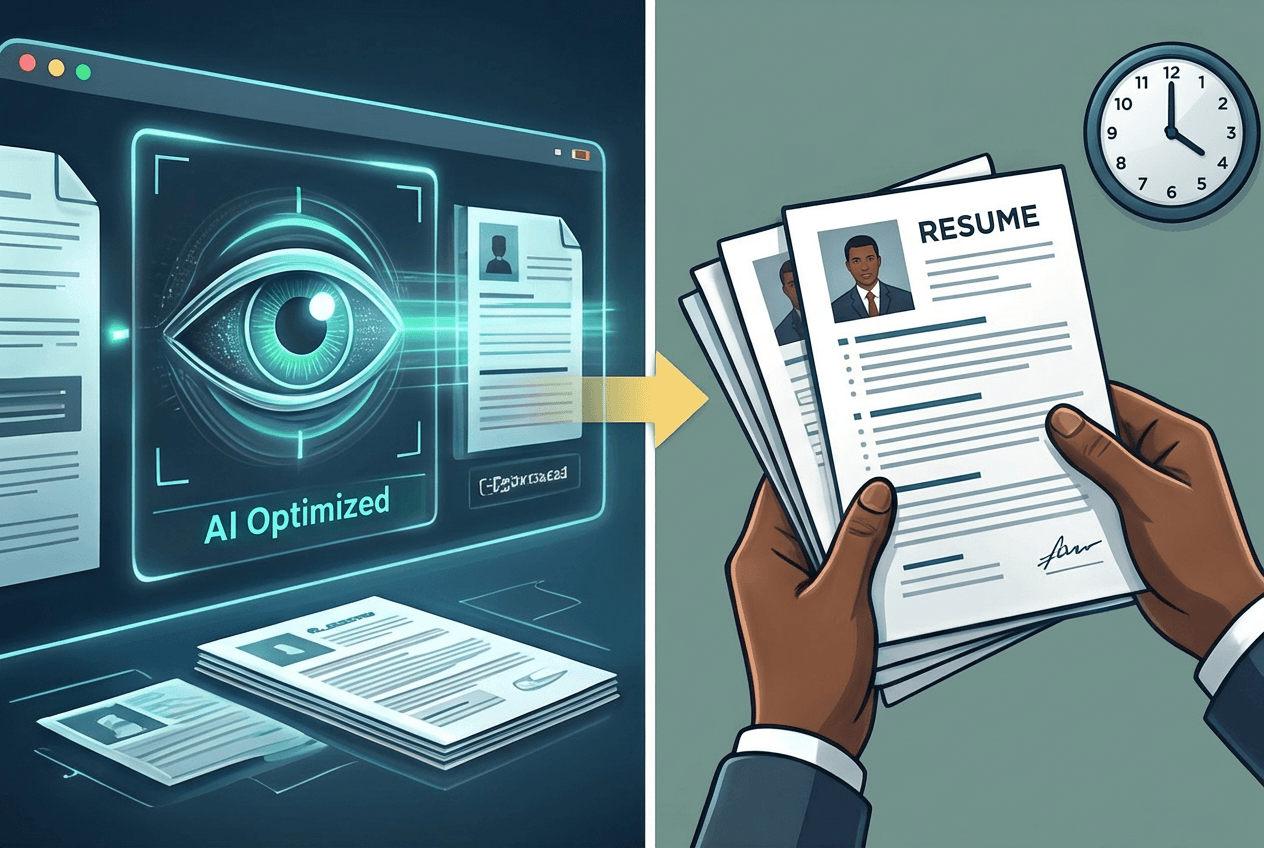
Because the hiring landscape has become so fast-paced and many job-seekers are looking for jobs; recruiters are often overwhelmed with the volume of job applications. The evolving technological world has made the application process for jobseekers much easier; however, recruiters face the problem of screening and going through large amounts of applications. This brings up the question of: should recruiters adapt to the use of Artificial Intelligence (AI) in the screening process or stick with manual screening?
What Is CV Parsing?
CV parsing is an automated process that extracts structured information from CVs/ resumes using AI-driven software, using Smart Search. The parsing technology is used to identify candidate data like: name and contact information, work experience, education, skills and certifications, as well as keywords relevant to job descriptions.
What Is Manual Screening?
Manual screening involves recruiters personally reviewing each CV to evaluate a candidate’s qualifications, experience, and overall fit. Manual screening heavily relies on human judgement. Recruiters look at career progression, communication style, cultural alignment, and red flags.
Key Differences at a Glance:
| Factor | CV Parsing | Manual Screening |
| Speed | Extremely fast | Time-consuming |
| Scalability | Handles high volume easily | Difficult at scale |
| Consistency | Standardized criteria | Can vary per reviewer |
| Bias Risk | Algorithmic bias possible | Human bias possible |
| Cost | Lower long-term cost | Higher labor cost |
Advantages of CV Parsing
The tragedy of the modern job search is when a highly qualified candidate gets rejected not because they lack the skills, but because the manual process skipped them because the CV got lost in the pool of high job applications. When your CV passes the parser, you finally reach the manual shortlisting stage.
STATISTICS:
Resume/ CV Parsing Software Market size was valued at USD 16.3 Billion in 2023 & is projected to reach USD 43.7 Billion by 2031.
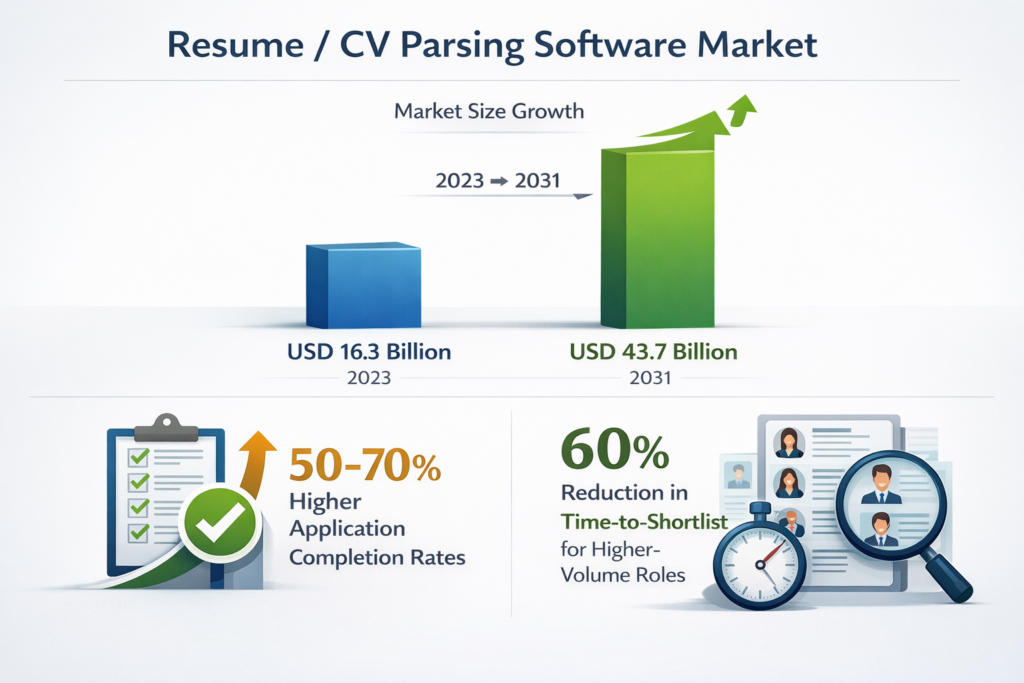
50 – 70% higher application completion rates.
60% reduction in time-to-shortlist for higher-volume roles.
To succeed in the now & the future, you have to write for the machine first so that you can get the chance to speak to the human second.
For recruiters that want to automate & switch to a faster, efficient & lower long-term cost tool, check out OMS’s CVEvolve.
Explore more insights, trends, and expert perspectives from the OMS team.
Browse All Articles